
Anthropic Plants Sydney Flag, Bleeds Snowflake for ANZ Talent
Same MOU template that ran in DC, London, Tokyo — but the Canberra version comes wrapped in a data-center pipeline and a research-grant moat that locks the next decade of ANZ AI buyers.
Australia's investment in AI safety makes it a natural partner for responsible AI development. This MOU gives our collaboration a formal foundation.
- The MOU is the wrapper. The AUD$3M in Claude credits at ANU, Garvan, MCRI and Curtin is the actual lock-in play.
- Sydney office plus telegraphed data-center capex means Anthropic is pricing in regional sovereignty premiums for the next RFP cycle.
- Frontier-lab consolidation now runs on the safety-institute axis: US, UK, Japan, Australia. The non-aligned vendor is the bear case.
- If you're an ANZ buyer with a 2026 procurement, model a 12-month head start for Claude on academic and clinical-research workloads.
The frontier-lab category is consolidating along a new axis, and the Canberra signing this week confirms it. The axis is the safety institute. Four jurisdictions now, the US, the UK, Japan, and Australia, operate formal safety-institute relationships with Anthropic, and each one comes with the same playbook: shared evaluations, early access to model capabilities data, and a research-credit drop that anchors the academic ecosystem on Claude before any buyer-side procurement contest takes place. This is not a deal. It is a category structure.
The Deployment
Anthropic and the Australian government signed a Memorandum of Understanding on March 31, 2026. CEO Dario Amodei met Prime Minister Anthony Albanese in Canberra to formalize it. The MOU's core commitment is collaboration with Australia's AI Safety Institute on joint safety and security evaluations, technical information sharing on emerging model capabilities, and joint research with Australian academic institutions. Anthropic will also share its Economic Index data with the Australian government to track AI adoption across sectors, with an initial focus on natural resources, agriculture, healthcare, and financial services.
Bundled with the MOU: an AUD$3 million commitment in Claude API credits to four research institutions, Australian National University, Murdoch Children's Research Institute, the Garvan Institute of Medical Research, and Curtin University. ANU's John Curtin School of Medical Research is applying Claude to genetic-sequencing analysis for rare diseases. Garvan, in partnership with UNSW and the Centre for Population Genomics, is automating genetic analysis bottlenecks in pediatric rare-disease diagnosis. MCRI is applying Claude to stem-cell research targeting childhood heart disease. Curtin's Institute for Data Science is using Claude across health sciences, humanities, business, law, science, and engineering.
Separately announced this week: a deep-tech startup API credit program offering up to USD$50,000 (around AUD$72,000) in Claude credits for VC-backed startups working in drug discovery, materials science, climate modeling, and medical diagnostics. And the company telegraphed it is exploring investments in data center infrastructure and energy across Australia, aligned with the government's recently announced data center expectations. A Sydney office is opening, with local team and leadership announcements promised in the coming weeks.
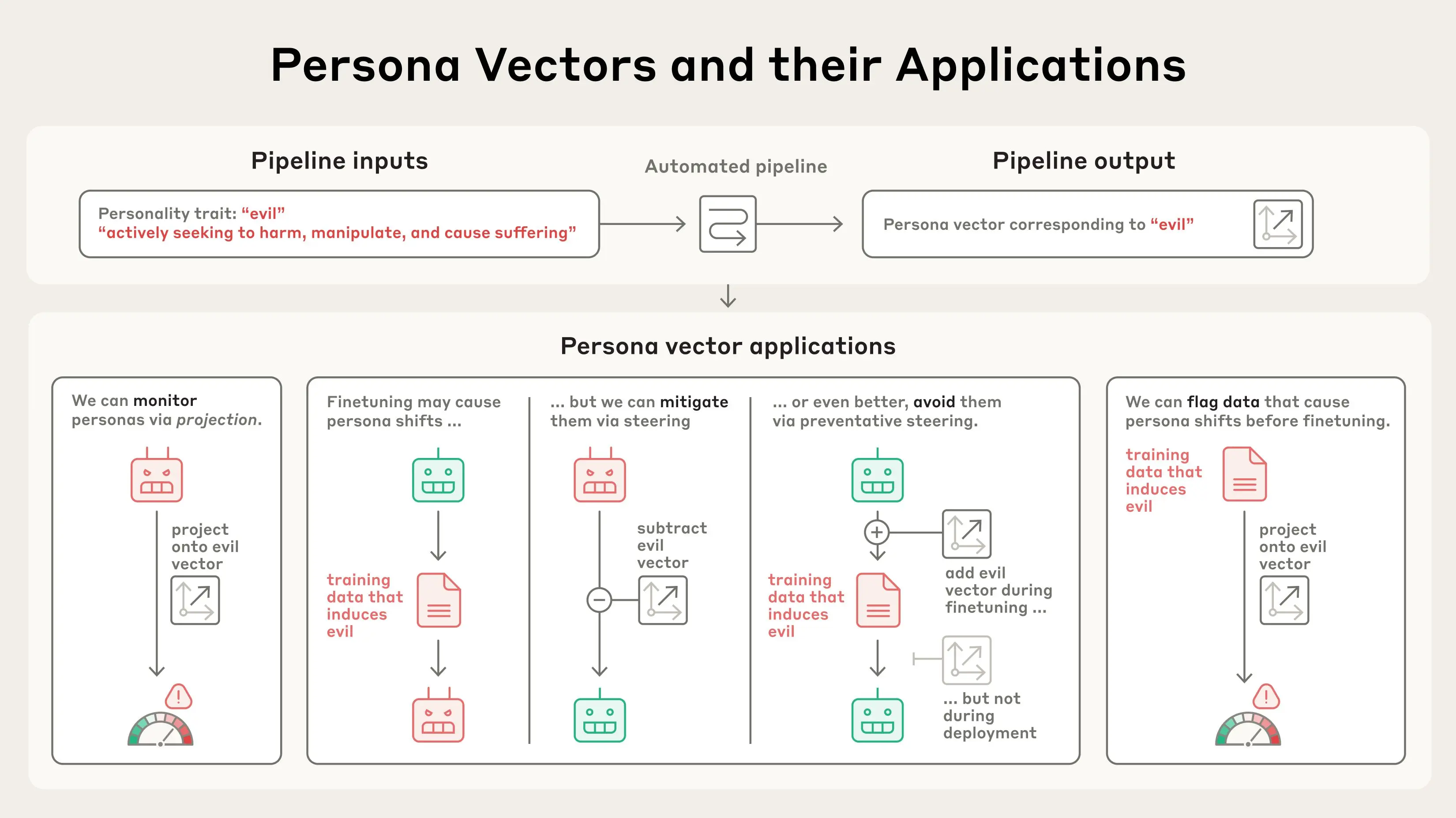
Why It Matters
The MOU itself is template work. Read the US, UK, and Japan agreements side by side and the structure is nearly identical: information sharing with the safety institute, joint evaluations, early access, academic collaboration. So the news is not that Australia signed. The news is what the signing is bundled with, and what it tells you about how Anthropic is pricing the Asia-Pacific region into its next eighteen months of capex.
The structural read is this. Frontier-model vendors are no longer competing on raw capability alone. They are competing on jurisdictional alignment, which governments will privilege their model in regulated procurement, which academic ecosystems will produce papers using their API rather than a competitor's, and which sovereign-cloud pipelines will route inference through their infrastructure rather than someone else's. The MOU is the entry ticket to that competition in any given country. The AUD$3M research drop is the down-payment on the academic flywheel. The Sydney office and the data-center capex telegraph are the supply-side commitment that will be cited back in every regulated-sector RFP for the next decade.
Compare to OpenAI. OpenAI does not have a parallel four-jurisdiction safety-institute portfolio. It has commercial relationships and a separate set of government partnerships, but the safety-institute axis has become Anthropic's specific moat. The Australian Economic Index data tie, sector-specific tracking on natural resources, agriculture, healthcare, financial services, is the kind of soft commitment that compounds. Once a government starts modeling AI adoption using one vendor's economic data, the political cost of switching is non-trivial. That is the structural bear case for any vendor not at the safety-institute table by end of 2026.
The Anthropic note that Australians already use Claude for the most diverse task set among English-speaking nations is a flex disguised as an analytics finding. It is also a buy signal: the country has high baseline familiarity with the product, the government has now formalized cooperation, the academic flagship institutions have credits to burn, and a local commercial team is being staffed. Comparable deals in this category, the UK Bletchley follow-on, the US AISI early-access pact, anchored regional buyer behavior for two to four quarters after signing. Expect the same here.
The data-center exploration is the part operators should watch most closely. Australia's recently announced data center expectations frame inference sovereignty as a procurement criterion in everything but name. If Anthropic commits to in-country compute by H2 2026, every regulated-sector buyer in financial services and healthcare gets a sovereignty story they can defend in a board pack. That is a material competitive advantage against any vendor still routing ANZ inference through US or Singapore regions.
What Other Businesses Can Learn
For any operator running an ANZ AI procurement in the next eighteen months, this MOU is a planning input, not a press release to skim. Five concrete moves.
First, recalibrate your vendor short-list against the safety-institute axis. If your shortlist contains vendors without a formal AISI-equivalent relationship in your jurisdiction, your procurement team needs to model the regulatory-drift risk over a three-year contract. The non-aligned vendor is now the structural bear case in regulated sectors.
Second, treat the AUD$3M Claude-credit drop at ANU, MCRI, Garvan, and Curtin as a hiring-pool signal. Graduates and researchers coming out of these institutions over the next twenty-four months will be Claude-fluent by default. If you are a Sydney or Melbourne mid-market firm trying to staff an AI team, your candidate pipeline is being shaped right now. Budget for the integration friction of either matching that fluency or paying to retrain on a different stack.
The non-aligned vendor is now the structural bear case in regulated sectors.
Third, if you are a VC-backed deep-tech startup in drug discovery, materials science, climate modeling, or medical diagnostics, the USD$50,000 credit program is real money for an early-stage burn rate. Apply. Even if you eventually multi-vendor, anchoring on the program reduces year-one inference cost and gives you a procurement-friendly story when you sell into government-adjacent buyers later.
Fourth, write a sovereignty clause into your 2026 RFP template. Once Anthropic announces in-country data-center capacity (and the telegraphing here is unambiguous that it is coming), the bar for "AI sovereignty" in ANZ procurement shifts. If your RFP does not require region-pinned inference, you are not asking the vendor to do work they would otherwise skip, you are leaving leverage on the table.
Fifth, watch the Economic Index sector focus. Anthropic explicitly named natural resources, agriculture, healthcare, and financial services as the initial Economic Index focus areas. Operators in those four sectors should expect a richer flow of vendor case studies, sector-specific reference architectures, and government-funded co-development opportunities. Operators in adjacent sectors (logistics, retail, education, public administration) will see those resources lag by two to three quarters.
Looking Ahead
The next twelve to eighteen months in this category run on three signals. Watch for Anthropic's Sydney office headcount and the named GM hire, the seniority of that role will tell you the size of the regional revenue target. Watch for the first announced ANZ data-center capex commitment; that is the inflection point where sovereignty stops being a slide and starts being a contract clause. And watch OpenAI's response. The comparable to track is whether OpenAI signs a parallel Australian arrangement before the end of Q3 2026, or whether it concedes the safety-institute axis and competes on price and capability alone. My read is the latter is more likely, and that the price-capability lane gets crowded fast.
Sources
- Australian government and Anthropic sign MOU for AI safety and research, accessed 2026-04-30
More from the same beat.
Behind Anthropic's Canberra MOU, OpenAI's APAC Gap Loomed
AUD$3M in research credits reads like ribbon-cutting, but Anthropic just locked its fourth sovereign safety-institute pact while OpenAI sits at zero.
- Four safety-institute pacts now (US, UK, Japan, AU); OpenAI has zero. That's a regulatory moat hardening into a procurement floor.
UT Austin Guts Hospital Plans, Ships AI-First Medical Center
The $2.5B build looks like a hospital, but the ground-up design puts data and AI in the foundation
- The $750M gift locks in AI infrastructure before the first blueprint is finalized, a lesson for any operator building a new facility.
Waymo Lands in Nashville, Metro Can’t Regulate Them
Same state roads, new operator, but the city can’t set rules or reject the rollout.
- Waymo’s deployment in Nashville is live and growing, but the city has zero regulatory leverage. The 2017 Tennessee law preempts local control, creating a structural void no municipal agency can fill.