20 AI Agent Startups Left? Sierra Axes Fragment Independence
Bret Taylor's customer service agent company picks up a French YC startup, and the operator math suddenly looks different.
Sierra acquiring Fragment isn't a feature drop. It's the first visible sign that the AI customer service agent market is consolidating, and SMB buyers should be watching contract terms a lot more carefully.
- This is the first real consolidation move in the overcrowded AI customer service agent market, a product-driven acquisition signaling that scale is now a survival requirement.
- SMBs lose optionality as vendor lists shrink; enterprises gain use through longer sales cycles and consolidated platforms. Fragment's standalone product loses autonomy.
- Comparable to the 2018 chatbot consolidation when Ada, Intercom, and Zendesk absorbed smaller players, but faster, driven by collapsing inference costs and buyer fatigue.
- Lock in contract clauses around product continuity, model transparency, and exit rights. Watch for follow-on acquisitions in the next 6–9 months as runway pressures mount.
The head of support at a forty-person SaaS company in Bristol pulled up her vendor shortlist on Wednesday morning, scrolled to Sierra, and said, half to me and half to her cold coffee, "right, so do I still want them, or do I want whatever they're about to become." She had been three weeks into evaluating Sierra against two other AI customer service vendors. Then the Fragment news landed, and her shortlist became a different document.
the actual texture of how the Sierra-Fragment deal gets received in the field. Not as a press release. As a procurement headache.
The Deployment
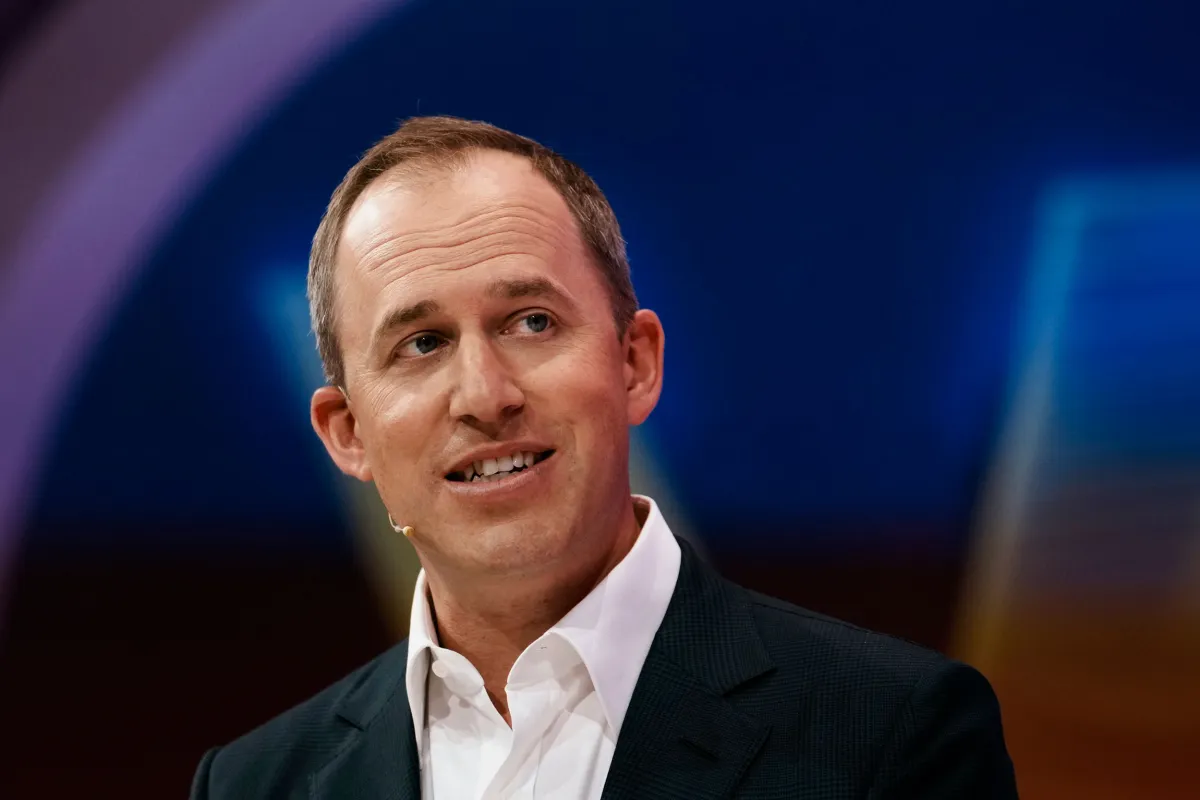
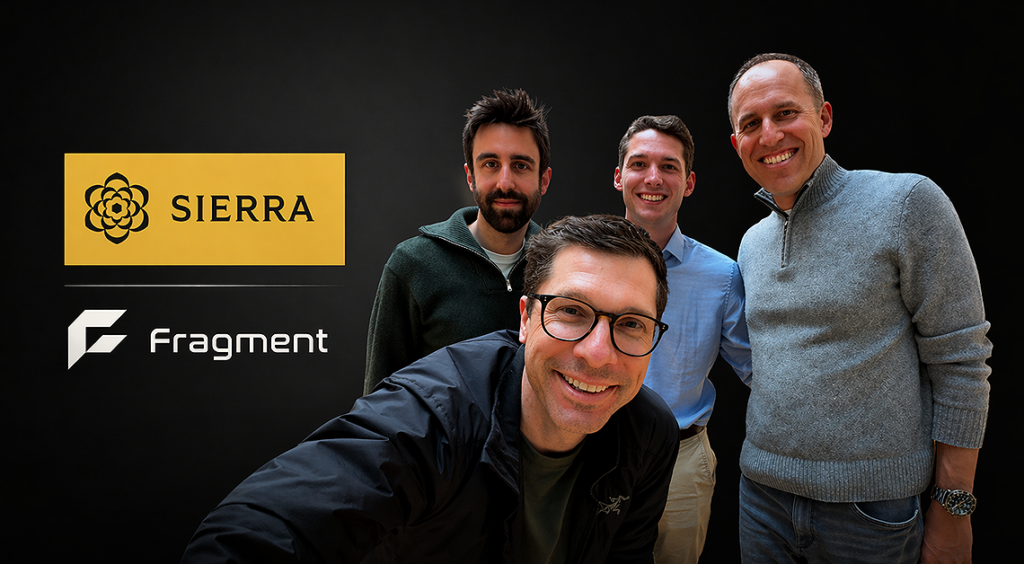
Sierra, the AI customer service agent company founded by Bret Taylor, announced on Wednesday that it has acquired Fragment, a YC-backed French startup. TechCrunch broke the story. The release does not disclose terms, headcount of the acquired team, or whether Fragment's existing customers continue on the original product or get migrated.
What we know: Sierra has been building enterprise-leaning customer service agents for a couple of years now, mostly serving brands that need something more configurable than a Zendesk macro and more accountable than a raw GPT wrapper. Fragment was a smaller, earlier-stage YC company out of France. The acquisition gives Sierra a French team, presumably some IP, and possibly a foothold in continental Europe that it did not have before.
roughly the entire substance of the announcement. The interesting part is what it implies, not what it states.
Why It Matters
For about eighteen months, the AI customer service agent category has looked like the inflatable pool toy of enterprise software. Every week there was a new vendor. Decagon. Sierra. Crescendo. Lorikeet. Forethought. Ada, which had pivoted into agents from chatbots. Salesforce had Agentforce. Intercom had Fin. There were at least a dozen YC companies pitching some variant of the same wedge, handle the tier-one tickets, deflect the easy stuff, escalate the hard stuff, and they were doing it with broadly similar architectures and broadly similar pricing.
That market has been waiting for a consolidation signal. Sierra buying Fragment is, I think, the first one that actually counts.
It counts for two reasons. First, it is a buyer of meaningful scale acquiring a company that was, on paper, a competitor or near-competitor. Not a talent acqui-hire dressed up as a deal. A real product company absorbing a real product company. Second, the buyer is Bret Taylor, who in addition to running Sierra is the chair of OpenAI's board, which means he sees the pricing curve on inference costs at a level of detail almost nobody else in the customer service agent market does. When Taylor decides the right move is to consolidate now rather than keep competing, that is a signal about where he thinks margins are heading.
The other thing worth saying out loud: this is going to keep happening. The customer service agent category cannot sustain twenty venture-backed entrants. The unit economics demand scale. The procurement cycle at a real enterprise buyer takes six to nine months, and most of these companies do not have the runway or the references to make it through that cycle on their own. Some get bought. Some quietly shut down and tell their seed investors a story about pivoting. The interesting question for an SMB operator is not which of these vendors wins. It is how to buy in a market where the vendor list at the end of 2026 will not look like the vendor list today.
I will be more specific. The customer in Bristol does not actually care which AI agent company "wins." She cares whether the agent she signs a two-year contract with is still the same product, with the same model under the hood, the same pricing tier, and the same integration with her ticketing system, twelve months from now. A contract problem, not a vendor selection problem. And every operator I have talked to in the last fortnight has been thinking about it wrong.
What Other Businesses Can Learn
If you are a small or mid-sized business currently evaluating any AI customer service agent, not just Sierra, the Sierra-Fragment news should change exactly five things on your evaluation checklist.
One. Read the change-of-control clause in the contract. Most SaaS contracts let the vendor assign the agreement to an acquirer without your consent. Standard boilerplate. What you want is a clause that gives you a termination right, with a pro-rata refund, if the vendor is acquired and the product materially changes within twelve months. Vendors will push back. Push back harder. The cost of being wrong here is a forced migration in the middle of a contract you already paid for.
Two. Ask the vendor explicitly which underlying foundation models they use, and what their fallback is if pricing on those models changes. Customer service agents are inference-heavy. Margin compression at the model layer cascades into pricing letters at the application layer.
Three. If you operate in the EU or UK, get data residency in writing, not in marketing pages. A French startup absorbed into a US parent is a GDPR conversation that needs a real answer before you ship customer transcripts through the system. "We are working on it" is not an answer.
Four. Demand a roadmap commitment for the specific integrations you actually use, Zendesk, Salesforce Service Cloud, HubSpot, Intercom, whatever. Acquired companies routinely deprecate integrations the parent does not need. If your support stack runs on Freshdesk and your vendor's parent has standardised on Zendesk, you are going to have a bad year.
Five. Budget realistically for the migration that you might be forced into. A reasonable rule of thumb, based on what I have seen at SMB shops over the last two years, is to assume any AI vendor under a hundred employees has roughly a one-in-three chance of being acquired or wound down within twenty-four months. Reserve enough internal engineering time and enough budget headroom to migrate. If you do not need it, great. If you do, you will be glad it is there.
The cost of being wrong on a change-of-control clause is a forced migration in the middle of a contract you already paid for.
The Bristol shop, for what it is worth, decided to extend her evaluation by three weeks and ask Sierra direct questions about the Fragment integration timeline and the EU data path. the right move. It costs nothing. It might save her a year of pain.
Looking Ahead
The next acquisition in this category is probably already in the data room. Watch which European-headquartered customer service agent companies announce a "strategic partnership" with a US vendor in the next ninety days, because half of those announcements are pre-acquisition tells. The other thing to watch is whether OpenAI, Anthropic, or Google moves to buy an applied agent company directly, which would compress the stack in a different and more disruptive way.
When I asked the Bristol head of support what she would do if Sierra came back without good answers on the EU data path, she shrugged and said, "then I buy something boring." There is a lot of wisdom in that sentence right now.
Related
- 65% resolution, then Intercom Fin bleeds support teams
- Governance over volume, the agent category grows up
Sources
- Bret Taylor's Sierra buys YC-backed AI startup Fragment, accessed 2026-04-25
More from the same beat.
Heretic 1.3 Ships Reproducible Runs, Bleeds the Fork-Cloners
Same abliteration tool, but now every published model carries a byte-for-byte recipe, and the mystique-merchants lose their cover.
- Reproducible runs are the real release; benchmarking and VRAM are table stakes that should have shipped last year.
Behind Monzo's Madrid Push, the US Retreat Loomed
Same neobank playbook, but Santander's Openbank already owns the Spanish SMB account before Monzo prints its first card.
- Monzo lands Spain with 50 staff and zero products beyond a listening tour. Read it as a foundation move, not a market push.
Moritz Raises $9M, Bleeds Harvey and Legora
The bet isn't selling AI to law firms. It's eating the law firm itself, $2B in contracts at a time.
- Moritz isn't a vendor. It's a law firm that closed $2B in contracts with seven staff and a four-hour turnaround.